Sadarak district of Nakhchivan Autonomous Republic (Azerbaijan) is situated adjacent to the Iğdır Province of Turkey, the Ararat Province of Armenia, and the West Azerbaijan Province of Iran (fig 1.). The significance of border areas in bird conservation is underscored, as these regions often serve as vital habitats, connecting diverse ecosystems and facilitating the unrestricted movement of avian populations. It’s worth noting that conflict zones, under certain circumstances, may become temporarily inaccessible or unsafe for human activities, inadvertently offering a respite for wildlife.
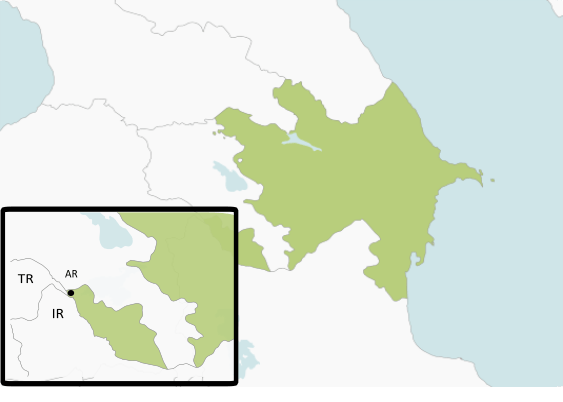
I spent a significant portion of my military service at this border junction of four countries from December 1, 2021, to July 1, 2022, spanning eight months. Throughout this period, almost on a daily basis, I seized every opportunity to engage in birdwatching, documenting a total of 99 bird species. Following my discharge, I continued my exploration and ventured into nearby wetlands (publicly accessible parts) for two more times, expanding my bird species list to 121 species on January 4, 2023. Given the limited size of the area and constraints on accessibility, the quantity holds significance in the context of conservation.
Among these species in Sadarak, 1 Endangered (EN) – Egyptian Vulture (Neophron percnopterus) 2 Vulnerable (VU) – Red-footed Falcon (Falco vespertinus), Common Pochard (Aythya ferina); and 3 Near threatened (NT) – Dalmatian Pelican (Pelecanus crispus), Pallid Harrier (Circus macrourus), and Cinereous Vulture (Aegypius monachus) is noted. It’s essential to note that, due to the challenges posed by the distance and the use of outdated Soviet binoculars, some observations were not entirely identifiable. There is a possibility that these unidentified observations may include species of conservation concern, as exemplified by the observation of 215 pelican species on March 12, 2022, believed to be Dalmatian Pelican, but kept as pelican sp.
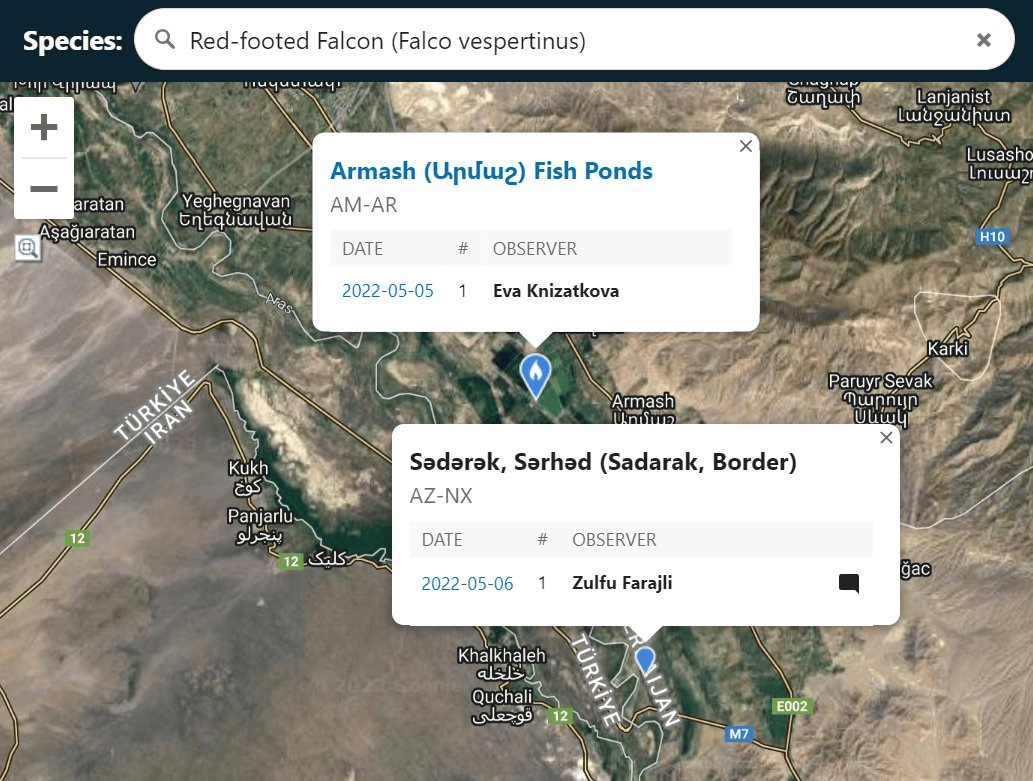
Among those observed, there were species of significant importance for the local context. Twenty species of birds observed are included in the Red Book of Azerbaijan and have national protection status, according to the Ministry of Ecology and Natural Resources of Azerbaijan in 2023. Notably, the Red-footed Falcon (Falco vespertinus) has been recorded in the country only a few times. Interestingly, a day before my observation, a Red-footed Falcon was spotted approximately 10 kilometers north in the Armash Wetlands on the Armenian side – the second record of the species for Armenia on eBird (Knizatkova 2022).
On the first of March, an adult Black-winged Kite (Elanus caeruleus) was observed hovering above the field for a couple of minutes and then flew towards Türkiye, marking the forth record of the species for Azerbaijan. Similarly, the migration of at least 426 Black Kites (Milvus migrans), 49 White Storks (Ciconia ciconia), 69 Greylag Geese (Anser anser), 26 White Wagtails, and others in the span of just 3 hours on March 24, 2022, is notable. Another noteworthy observation by the author includes a pair of Montagu’s harriers present in the area between April 25 and June 30, 2022, actively engaging in territorial disputes with Marsh Harriers, suggesting potential breeding. For context, Patrikeev (2004) categorizes their status as “uncommon nesting species and migrant” for Azerbaijan.
Additionally, other rare and protected species, such as 11 Lesser White-fronted Geese (Anser erythropus), were previously observed among some 200 Gretaer White-Fronted Geese (Anser albifrons) in the Shirarkhi area on both January 20th and January 24th, 2015 (Morozov et al. 2015).
As the area is highly militarized, there has been limited research from an ornithological perspective. My observations may only represent a fraction of the biodiversity, as time constraints and other mandatory tasks sometimes prevented me from focusing solely on birding. Unfortunately, I was discharged from the location before the autumn migration, which, based on my impressions from the spring migration, could significantly contribute to the avian biodiversity in the area.
Nearby Important Biodiversity Areas and threats.
According to the citizen science platform eBird, 236 species have been documented in the nearby (~10 km North from Sadarak) Armash Wetlands. Designed as an Important Bird and Biodiversity Area (IBA), the area provides suitable cover and breeding places for grebes, cormorants, egrets/herons, rails, ducks, and other birds (Birdlife International 2023). Additionally, the region hosts globally significant conservation species known to breed, including the White-headed Duck (Oxyura leucocephala) (Aghababyan 2019), Marbled Teal (Marmaronetta angustirostris), Ferruginous Duck (Aythya nyroca), and Pygmy Cormorant (Microcarbo pygmaeus) (Birdlife International 2023). Other rare species recorded in the area include Spur-winged Lapwing, White-tailed Lapwing, Paddyfield Warbler, Red-footed Falcon and the Red-rumped Swallow (Aghababyan and Slobodyan 2023) and so on.
Similarly, approximately 100 km northwest of Sadarak, at the Aras Bird Ringing Center (Aras Kuş Halkalama İstasyonu), over 300 species have been recorded. Among these recorded species are rare Blyth’s Reed Warbler, Little Bunting, Black-Winged Pratincoles, Black-headed Penduline Tit, Dead Sea Sparrow, Syke’s Warbler, and others, highlighting the ornithological importance of the overall area. This significance is emphasized by the similarity of the landscape to that of Sadarak.
In the Azerbaijani border region, there is a water channel known as “Shirarkhi” (translated as “Lion Creek,” possibly named after the extinct Caspian tiger). This channel originates from the Aras River along the Azeri-Turkish border and flows towards the Armash Wetlands in Armenia. Due to the proximity to the highly militarized border, access is restricted, and only fishing is permitted to some extent (my 2 visits after discharge were in this part of the area). Despite the hunting ban in Nakhchivan Autonomous Republic since 2001, there have been reported instances of individuals, primarily military personnel, engaging in hunting, mostly wild boars. Similarly, the author observed poachers on the Turkish side of the border shooting some birds, including geese and Great Cormorants. In addition to armed conflicts between Azerbaijan and Armenia there was a political dispute concerning the operations of the nearby Yeraskh Metallurgical Plant in Armenia and its potential impact on local ecosystems in the border area (Norén 2023).
The overall area, along with being home to some important and rare bird species, is recognized as a historical habitat for some of the rarest mammals in the Caucasus ecoregion. Notably, Pallas’s cat (Otocolobus manul) has been documented in Armenia (Khorozyan et al. 2020), and the Persian Leopard (Panthera pardus tulliana) was later recorded in Turkey at the end of 2021 (AYDIN 2021). It is also possible that the Azerbaijani side of the border could host species not yet recorded but found in nearby countries, such as the Anatolian ground squirrel (Spermophilus xanthoprymnus) or the recently described fat-tailed scorpion (Androctonus kunti) from Iğdır, Türkiye.
Despite the expansive reach of the Caucasus ecoregion, which extends from Russia to Iran and Eastern Turkey to Caspian Sea, the protected areas encompass only approximately 10% of the total region’s area (Zazanashvili et al. 2020).Therefore, the establishment of a conservation area in the respective countries at the border junction would significantly benefit local biodiversity.
I am of the opinion that establishing Important Bird Areas (IBA) and initiating transboundary collaboration in conservation in Shirarkhi, Sadarak, and corresponding areas of other countries where borders converge (especially Armash Wetlands), would not only safeguard the survival of numerous species but also foster political collaboration among the involved parties and boost peace-building efforts.
Appendix. List of birds observed in Sadarak in 2021-23 by the author:
| Common Name | Scientific Name | First seen | Last Seen | Highest # | IUCN list | |
| 1 | Graylag Goose | Anser anser | 2021-12-02 | 2022-10-29 | 3000 | |
| 2 | Greater White-fronted Goose | Anser albifrons | 2021-12-14 | 2021-12-14 | 84 | |
| 3 | Whooper Swan | Cygnus cygnus | 2022-02-06 | 2022-02-09 | 20 | |
| 4 | swan sp. | Cygnus sp. | 2022-01-04 | 2022-01-06 | 42 | |
| 5 | Ruddy Shelduck | Tadorna ferruginea | 2022-01-23 | 2022-06-20 | 50 | |
| 6 | Common Shelduck | Tadorna tadorna | 2023-01-04 | 2023-01-04 | 65 | |
| 7 | Garganey | Spatula querquedula | 2022-10-29 | 2022-10-29 | 1 | |
| 8 | Northern Shoveler | Spatula clypeata | 2022-10-29 | 2022-10-29 | 1 | |
| 9 | Mallard | Anas platyrhynchos | 2022-01-21 | 2022-10-29 | 33 | |
| 10 | Northern Pintail | Anas acuta | 2022-02-05 | 2022-03-28 | 400 | |
| 11 | Green-winged Teal | Anas crecca | 2022-02-05 | 2023-01-04 | 500 | |
| Anas sp. | Anas sp. | 2022-06-08 | 2022-06-08 | 50 | ||
| 12 | Red-crested Pochard | Netta rufina | 2022-10-29 | 2022-10-29 | 1 | |
| 13 | Common Pochard | Aythya ferina | 2022-02-10 | 2022-10-29 | 2 | VU |
| duck sp. | Anatidae (duck sp.) | 2022-01-04 | 2022-02-09 | 31 | ||
| 14 | Common Quail | Coturnix coturnix | 2022-04-21 | 2022-04-21 | 1 | |
| 15 | Chukar | Alectoris chukar | 2022-02-22 | 2022-05-04 | 2 | |
| 16 | Eared Grebe | Podiceps nigricollis | 2022-10-29 | 2022-10-29 | 10 | |
| 17 | Rock Pigeon | Columba livia | 2022-10-29 | 2023-01-04 | 50 | |
| 18 | Common Wood-Pigeon | Columba palumbus | 2022-03-30 | 2022-06-28 | 3 | |
| 19 | Eurasian Collared-Dove | Streptopelia decaocto | 2022-04-21 | 2022-04-21 | 1 | |
| 20 | Black-bellied Sandgrouse | Pterocles orientalis | 2022-06-24 | 2022-07-01 | 2 | |
| 21 | Common Cuckoo | Cuculus canorus | 2022-04-21 | 2022-06-28 | 2 | |
| 22 | Eurasian Nightjar | Caprimulgus europaeus | 2022-05-25 | 2022-05-25 | 1 | |
| 23 | Alpine Swift | Tachymarptis melba | 2022-05-08 | 2022-05-08 | 1 | |
| 24 | Common Swift | Apus apus | 2022-03-24 | 2022-06-29 | present | |
| 25 | Water Rail | Rallus aquaticus | 2023-01-04 | 2023-01-04 | 2 | |
| 26 | Eurasian Moorhen | Gallinula chloropus | 2022-10-29 | 2023-01-04 | 2 | |
| 27 | Eurasian Coot | Fulica atra | 2022-10-29 | 2022-10-29 | present | |
| 28 | Black-winged Stilt | Himantopus himantopus | 2022-04-25 | 2023-01-04 | 100 | |
| 29 | Pied Avocet | Recurvirostra avosetta | 2022-06-21 | 2023-01-04 | 19 | |
| 30 | Little Ringed Plover | Charadrius dubius | 2022-04-27 | 2022-06-24 | 3 | |
| 31 | Northern Lapwing | Vanellus vanellus | 2022-04-24 | 2023-01-04 | 22 | |
| 32 | White-tailed Lapwing | Vanellus leucurus | 2023-01-04 | 2023-01-04 | 6 | |
| 33 | Common Snipe | Gallinago gallinago | 2022-10-29 | 2023-01-04 | 5 | |
| 34 | Green Sandpiper | Tringa ochropus | 2022-06-27 | 2023-01-04 | 1 | |
| 35 | Spotted Redshank | Tringa erythropus | 2022-10-29 | 2022-10-29 | 14 | |
| 36 | Common Redshank | Tringa totanus | 2023-01-04 | 2023-01-04 | 3 | |
| 37 | Ruff | Calidris pugnax | 2022-10-29 | 2023-01-04 | 1 | |
| 38 | Collared Pratincole | Glareola pratincola | 2022-04-24 | 2022-06-28 | 7 | |
| 39 | Black-headed Gull | Chroicocephalus ridibundus | 2022-02-28 | 2022-10-29 | 1000 | |
| 40 | Caspian Gull | Larus cachinnans | 2021-12-05 | 2022-10-29 | 10 | |
| 41 | Armenian Gull | Larus armenicus | 2022-01-02 | 2023-01-04 | 1 | |
| Larus sp. | Larus sp. | 2022-01-21 | 2022-03-24 | 100 | ||
| gull sp. | Larinae sp. | 2022-01-04 | 2022-06-21 | 40 | ||
| 42 | Whiskered Tern | Chlidonias hybrida | 2022-06-08 | 2022-06-08 | 2 | |
| 43 | White-winged Tern | Chlidonias leucopterus | 2022-04-24 | 2022-06-08 | 47 | |
| 44 | White Stork | Ciconia ciconia | 2022-01-05 | 2022-06-28 | 41 | |
| 45 | Pygmy Cormorant | Microcarbo pygmaeus | 2022-01-21 | 2023-01-04 | 10 | |
| 46 | Great Cormorant | Phalacrocorax carbo | 2021-12-05 | 2022-10-29 | 49 | |
| 47 | Great White Pelican | Pelecanus onocrotalus | 2022-04-26 | 2022-06-22 | 60 | |
| 48 | Dalmatian Pelican | Pelecanus crispus | 2021-12-21 | 2022-10-29 | 64 | NT |
| pelican sp. | Pelecanus sp. | 2022-03-12 | 2022-05-24 | 215 | ||
| 49 | Great Bittern | Botaurus stellaris | 2023-01-04 | 2023-01-04 | 1 | |
| 50 | Black-crowned Night Heron | Nycticorax nycticorax | 2022-01-14 | 2022-06-08 | 48 | |
| 51 | Little Egret | Egretta garzetta | 2022-04-26 | 2022-06-28 | 6 | |
| 52 | Squacco Heron | Ardeola ralloides | 2022-04-28 | 2022-06-29 | 4 | |
| 53 | Western Cattle Egret | Bubulcus ibis | 2022-05-12 | 2022-06-27 | 28 | |
| 54 | Great Egret | Ardea alba | 2022-01-23 | 2023-01-04 | 4 | |
| 55 | Gray Heron | Ardea cinerea | 2022-01-04 | 2023-01-04 | 4 | |
| 56 | Purple Heron | Ardea purpurea | 2022-05-08 | 2022-06-08 | 2 | |
| Gray/Purple Heron | Ardea cinerea/purpurea | 2022-04-24 | 2022-06-28 | 3 | ||
| white egret sp. | Egretta/Bubulcus/Ardea sp. | 2022-04-28 | 2022-04-28 | 40 | ||
| 57 | Glossy Ibis | Plegadis falcinellus | 2022-04-24 | 2022-06-28 | 23 | |
| 58 | Eurasian Spoonbill | Platalea leucorodia | 2022-04-27 | 2022-06-28 | 5 | |
| 59 | Black-winged Kite | Elanus caeruleus | 2022-03-01 | 2022-03-01 | 1 | |
| 60 | Egyptian Vulture | Neophron percnopterus | 2022-05-09 | 2022-05-09 | 1 | EN |
| 61 | European Honey-buzzard | Pernis apivorus | 2022-05-06 | 2022-05-06 | 4 | |
| 62 | Cinereous Vulture | Aegypius monachus | 2022-03-12 | 2022-06-24 | 3 | NT |
| 63 | Eurasian Griffon | Gyps fulvus | 2022-04-26 | 2022-04-26 | 2 | |
| 64 | Short-toed Snake-Eagle | Circaetus gallicus | 2022-04-25 | 2022-05-09 | 1 | |
| 65 | Booted Eagle | Hieraaetus pennatus | 2022-05-04 | 2022-05-04 | 1 | |
| 66 | Golden Eagle | Aquila chrysaetos | 2022-02-07 | 2022-05-12 | 2 | |
| 67 | Western Marsh Harrier | Circus aeruginosus | 2021-12-04 | 2023-01-04 | 4 | |
| 58 | Hen Harrier | Circus cyaneus | 2021-12-14 | 2022-06-21 | 3 | |
| 69 | Pallid Harrier | Circus macrourus | 2021-12-06 | 2021-12-06 | 1 | NT |
| 70 | Montagu’s Harrier | Circus pygargus | 2022-04-25 | 2022-06-30 | 2 | |
| Pallid/Montagu’s Harrier | Circus macrourus/pygargus | 2022-05-04 | 2022-06-24 | 2 | ||
| harrier sp. | Circus sp. | 2021-12-15 | 2022-06-27 | 2 | ||
| 71 | Eurasian Sparrowhawk | Accipiter nisus | 2022-01-01 | 2022-05-05 | 1 | |
| 72 | Black Kite | Milvus migrans | 2022-03-24 | 2022-05-05 | 426 | |
| 73 | White-tailed Eagle | Haliaeetus albicilla | 2021-12-02 | 2022-04-26 | 2 | |
| 74 | Common Buzzard | Buteo buteo | 2022-03-24 | 2022-04-01 | 2 | |
| 75 | Long-legged Buzzard | Buteo rufinus | 2022-03-24 | 2022-04-26 | 1 | |
| 76 | Little Owl | Athene noctua | 2021-12-07 | 2022-06-22 | 2 | |
| 77 | Eurasian Hoopoe | Upupa epops | 2022-03-01 | 2022-06-29 | 5 | |
| 78 | Blue-cheeked Bee-eater | Merops persicus | 2022-05-05 | 2022-06-29 | 25 | |
| 79 | European Bee-eater | Merops apiaster | 2022-04-23 | 2022-06-28 | 18 | |
| 80 | European Roller | Coracias garrulus | 2022-05-05 | 2022-05-21 | 2 | |
| 81 | Eurasian Kestrel | Falco tinnunculus | 2022-01-04 | 2022-06-16 | 3 | |
| 82 | Red-footed Falcon | Falco vespertinus | 2022-05-06 | 2022-05-06 | 1 | VU |
| 83 | Eurasian Hobby | Falco subbuteo | 2022-05-05 | 2022-05-24 | 1 | |
| diurnal raptor sp. | Accipitriformes/Falconiformes sp. | 2022-05-05 | 2022-05-18 | 12 | ||
| 84 | Red-backed Shrike | Lanius collurio | 2022-05-07 | 2022-05-18 | 6 | |
| 85 | Great Gray Shrike | Lanius excubitor | 2022-01-12 | 2022-01-12 | 1 | |
| 86 | Lesser Gray Shrike | Lanius minor | 2022-05-01 | 2022-05-13 | 10 | |
| 87 | Woodchat Shrike | Lanius senator | 2022-05-05 | 2022-05-07 | 4 | |
| 88 | Eurasian Magpie | Pica pica | 2022-02-24 | 2023-01-04 | 75 | |
| 89 | Eurasian Jackdaw | Corvus monedula | 2022-01-21 | 2022-05-08 | 20 | |
| 90 | Hooded Crow | Corvus cornix | 2023-01-04 | 2023-01-04 | 2 | |
| 91 | Rook | Corvus frugilegus | 2022-05-18 | 2022-05-18 | present | |
| 92 | Common Raven | Corvus corax | 2021-12-04 | 2022-06-29 | 4 | |
| 93 | Great Tit | Parus major | 2022-03-28 | 2022-03-28 | 1 | |
| 94 | Turkestan Short-toed Lark | Alaudala heinei | 2022-05-05 | 2022-05-24 | 3 | |
| 95 | Crested Lark | Galerida cristata | 2022-02-25 | 2023-01-04 | 10 | |
| 96 | Moustached Warbler | Acrocephalus melanopogon | 2022-10-29 | 2023-01-04 | 3 | |
| 97 | Sedge Warbler | Acrocephalus schoenobaenus | 2023-01-04 | 2023-01-04 | 2 | |
| 98 | Great Reed Warbler | Acrocephalus arundinaceus | 2022-04-25 | 2022-06-05 | 1 | |
| 99 | Bank Swallow | Riparia riparia | 2022-04-28 | 2022-06-28 | present | |
| 100 | Barn Swallow | Hirundo rustica | 2022-02-25 | 2022-06-29 | present | |
| 101 | Western House-Martin | Delichon urbicum | 2022-05-12 | 2022-05-21 | present | |
| 102 | Common Chiffchaff | Phylloscopus collybita | 2022-03-28 | 2022-10-29 | 2 | |
| 103 | Menetries’s Warbler | Curruca mystacea | 2022-04-21 | 2022-05-24 | present | |
| 104 | Eurasian Wren | Troglodytes troglodytes | 2022-01-05 | 2022-02-22 | 1 | |
| 105 | European Starling | Sturnus vulgaris | 2022-02-24 | 2022-10-29 | present | |
| 106 | Rosy Starling | Pastor roseus | 2022-05-04 | 2022-06-28 | 45 | |
| 107 | Spotted Flycatcher | Muscicapa striata | 2022-05-04 | 2022-05-18 | 3 | |
| 108 | Rufous-tailed Scrub-Robin | Cercotrichas galactotes | 2022-05-13 | 2022-06-20 | present | |
| 109 | Bluethroat | Luscinia svecica | 2022-03-30 | 2022-04-01 | 1 | |
| 110 | Siberian Stonechat | Saxicola maurus | 2022-10-29 | 2022-10-29 | 1 | |
| 111 | Northern Wheatear | Oenanthe oenanthe | 2022-03-18 | 2022-05-10 | 2 | |
| 112 | House Sparrow | Passer domesticus | 2021-12-02 | 2022-10-29 | present | |
| 113 | Spanish Sparrow | Passer hispaniolensis | 2022-02-09 | 2022-02-22 | present | |
| 114 | Eurasian Tree Sparrow | Passer montanus | 2022-01-21 | 2022-05-18 | 15 | |
| 115 | Western Yellow Wagtail | Motacilla flava | 2022-05-06 | 2022-05-10 | 20 | |
| 116 | White Wagtail | Motacilla alba | 2022-01-02 | 2022-10-29 | 39 | |
| 117 | Water Pipit | Anthus spinoletta | 2023-01-04 | 2023-01-04 | 5 | |
| 118 | Common Chaffinch | Fringilla coelebs | 2021-12-02 | 2022-01-21 | present | |
| 119 | Black-headed Bunting | Emberiza melanocephala | 2022-05-05 | 2022-06-22 | 2 | |
| 120 | Corn Bunting | Emberiza calandra | 2021-12-26 | 2022-05-18 | present | |
| 121 | Reed Bunting | Emberiza schoeniclus | 2021-12-26 | 2022-10-29 | present |
LITERATURE CITED
Aghababyan, Karen. 2019. Recent counts of White-headed Ducks Oxyura leucocephala in Armash wetlands, Armenia. 41. 5-6. 10.2305/IUCN.UK.2017-3.RLTS.T22679814A119403602.en.
Aghababyan Karen and Slobodyank Roman. 2023. Red-rumped Swallow Cecropis daurica – a new breeding species for Armenia. Sandgrouse 45, 232-234.
AYDIN ÖZKAN. 2021. Nesli tükenme tehlikesi altındaki leopar Iğdır’da görüldü [The endangered leopard was seen in Iğdır]. Milliyet Gazetesi. https://www.milliyet.com.tr/gundem/igdirda-leopar-goruldu-6662069
BirdLife International (2023) Important Bird Area factsheet: Armash fish-farm. Downloaded from http://datazone.birdlife.org/site/factsheet/armash-fish-farm-iba-armenia on 27/12/2023.
Farajli Z.2021.TRANSBOUNDARY COOPERATION WITHIN CONSERVATION FIELD IN THE SOUTH CAUCASUS REGION. [Master’s dissertation, Corvinus University of Budapest]
Khorozyan, Igor & Ananian, Vasil & Malkhasyan, Alexander. (2020). No longer regionally extinct: a review of Pallas’s Cat Otocolobus manul records from the Caucasus with a new record from Armenia (Mammalia: Felidae). Zoology in the Middle East. 10.1080/09397140.2020.1865663.
Knizatkova, Eva. 2022. eBird Checklist: https://ebird.org/checklist/S110211861. eBird: An online database of bird distribution and abundance [web application]. eBird, Ithaca, New York. Available: http://www.ebird.org. (Accessed: 28.12.2023).
Norén Patrick. 2023. Opinion: Yeraskh metallurgical plant becomes the latest dispute threatening to complicate the Armenia-Azerbaijan peace process. https://www.commonspace.eu/opinion/opinion-yeraskh-metallurgical-plant-becomes-latest-dispute-threatening-complicate-armenia
Ministry of Ecology and Natural Resources of Azerbaijan (MENR), Institute of Zoology, National Academyof Science. 2023. Azərbaycan Respublikasinin Qirmizi Kitabi Fauna [Red Book of the Republic Of Azerbaijan Fauna] III edition.
Morozov, Vladimir & Sultanov, Elchin & Mammadov, Arzu. 2015. Survey of Lesser White-fronted Goose Anser erythropus in Nakhchivan, Azerbaijan, January 2015. 10.13140/RG.2.1.1968.1688.
Patrikeev, M. 2004. The Birds of Azerbaijan. Pensoft Publishers, Sofia & Moscow (Pensoft Series Faunistica 38)
Vasilijević, M., Zunckel, K., McKinney, M., Erg, B., Schoon, M., Rosen Michel, T. (2015).
Transboundary Conservation: A systematic and integrated approach. Best Practice Protected
Area Guidelines Series No. 23, Gland, Switzerland: IUCN.
Zazanashvili, N., Sanadiradze, G., Garforth, M., Bitsadze, M., Manvelyan, K., Askerov, E., Mousavi, M., Krever, V., Shmunk, V., Kalem, S. and Devranoğlu Tavsel, S., eds. (2020). Ecoregional Conservation Plan for the Caucasus: 2020 Edition. WWF, KfW, Tbilisi.
Leave a Reply